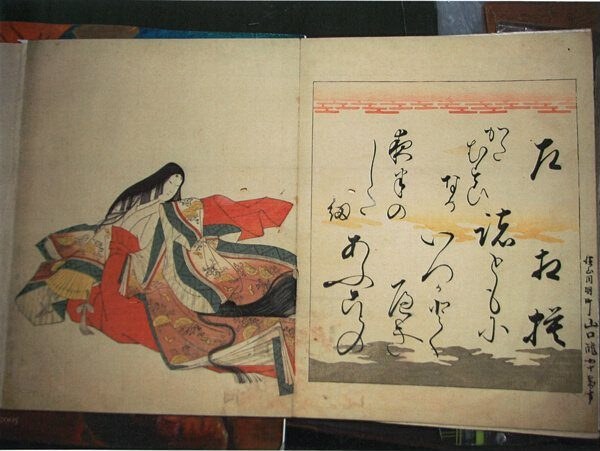
Chôbunsai Eishi (1756–1829)
The Poetess Gishumon-in no Tango, from the series The Thirty-Six Immortal Women Poets (Nishikizuri onna sanjurokkasen)
1801
- Accession
- AA.1806.01
- Department
- Asian Art
- Gallery
- AA1 · Ukiyo-e: Landscapes
- Date
- 1801
- Medium
- Pages from a color woodblock-printed volume
- Made in
- Japan
- Original held
- Chicago
← Previous in gallery
Mother and Child at Dusk (Oyako yugure), from the series "Three Evening Pleasure of the Floating World (Ukiyo san seki)"Next in gallery →
Artist, Block Carver, Applying Sizing (Eshi, hangashi, dosa-biki), from the series The Cultivation of Brocade Prints, a Famous Product of Edo (Edo meibutsu nishiki-e kosaku)
Chôbunsai Eishi's The Poetess Gishumon-in no Tango, from the series The Thirty-Six Immortal Women Poets (Nishikizuri onna sanjurokkasen), 1801, is in the collection of the National Museum of Public Art, where it hangs in Gallery AA1, Ukiyo-e: Landscapes (1800–1870), in the Department of Asian Art.
Pages from a color woodblock-printed volume. Made in Japan. The original is held in Chicago. Catalogued as accession AA.1806.01.
The collection holds two works by Chôbunsai Eishi: A Courtesan Reading a Letter.